
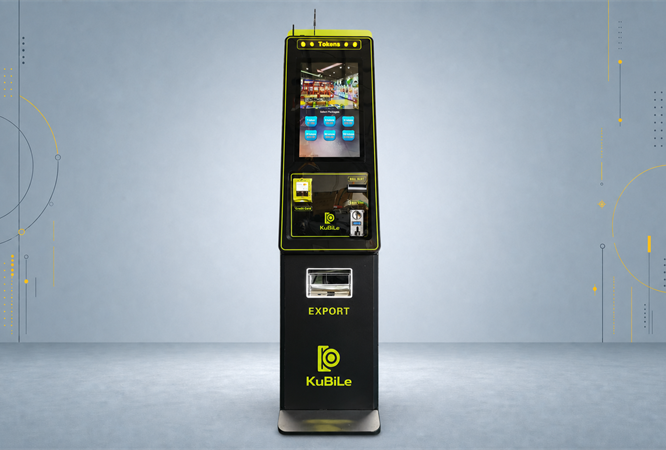
How to Choose a Token Changer for Your Arcade
A token changer can look like a simple machine, but the right choice depends on how your arcade actually operates. Payment input, token output, peak demand, cabinet size, refill frequency and staff workflow all affect which configuration will work well in daily use.
This guide gives arcade operators and family entertainment centers a practical way to compare token changer machines before requesting a quote. The goal is not to start with screen size or cabinet appearance. Start with the transaction you need the machine to complete.
1. Define the Transaction from Input to Output
Write the intended customer journey in one sentence. For example: a guest inserts cash and receives arcade tokens, or a guest completes an approved electronic payment and receives a selected token quantity.
This step prevents a common purchasing mistake: comparing machines with similar cabinets but different transaction logic. A token vending machine, a bill-to-token changer, a card kiosk and a token deposit machine may sit in the same venue, but they do not perform the same job.
- What will the customer insert or scan?
- What must the machine dispense?
- Does the customer choose a quantity or receive a fixed exchange?
- Is the machine connected to a card or venue-management system?
- What should happen if a payment is accepted but the output cannot be completed?
2. Confirm Payment Inputs for the Target Market
Cash, coins, bank cards and QR or mobile payments involve different hardware, software and regional requirements. Do not assume that a payment option shown on one model will be available on every machine or in every country.
For cash projects, confirm the accepted currency, denominations and validator configuration. For coin input, confirm coin dimensions and denomination logic. For card or QR projects, identify the required payment provider, communication method and local integration responsibility before the cabinet is finalized.
A useful supplier request does not simply say “support QR payment.” It identifies the target country, payment provider, transaction flow and the party responsible for integration and testing.
3. Match the Machine to Your Tokens
Token diameter, thickness, material and weight affect the acceptor, hopper and dispensing setup. If your venue already has tokens, provide physical samples or verified dimensions. If the project will use new tokens, decide the token specification before final machine configuration.
Also confirm the required payout logic. Some venues sell fixed packages, while others need different token quantities for different payment amounts. The operator should be able to describe each payment-to-token rule clearly enough to test it before delivery.
4. Estimate Capacity from Peak Demand
A larger hopper reduces refill frequency, but capacity should be evaluated against real operating demand rather than treated as a stand-alone selling point.
- Estimate transactions during the busiest hour.
- Multiply that figure by the average tokens dispensed per transaction.
- Decide how often staff can inspect and refill the machine.
- Include a practical reserve for weekends, promotions and seasonal peaks.
Capacity also affects cabinet size and machine placement. A compact countertop unit may suit a supervised counter or a smaller venue, while a floor-standing cabinet may be more appropriate for higher traffic or larger token storage requirements.
5. Check Footprint, Access and Power
Measure the installation area before selecting a cabinet. Record the available width, depth and height, but also leave space for doors, ventilation, refilling and maintenance access. A machine that fits the floor plan may still be difficult to service if it is placed too close to a wall or another cabinet.
Confirm the required input voltage for the exact model and destination. Power specifications should come from the approved product record for that machine rather than from a similar-looking model.
6. Review the Operator and Customer Interface
The customer interface should make the available transaction clear: payment amount, token quantity, instructions and transaction result. For overseas projects, confirm the required language and any local wording before production.
Operator access matters as well. Ask how staff refill tokens, review errors, open the cabinet and reach components that may require cleaning or replacement. If reports, remote functions or system connections are important, define the exact required fields and workflow instead of relying on a general phrase such as “smart management.”
7. Compare Service and Project Requirements
Before ordering, ask what information the supplier needs to configure and test the machine. A clear project brief should cover the venue, destination country, payment input, token specification, expected capacity, cabinet preference, interface language and required quantity.
Commercial terms, lead time, warranty scope, spare parts and certifications should be confirmed for the exact order. Do not assume that a statement for one model, component or market automatically applies to another.
Token Changer Comparison Checklist
| Decision Area | What to Confirm |
|---|---|
| Venue | Arcade, FEC, amusement park or another operating scenario |
| Transaction | Exact payment input and token output sequence |
| Payments | Currency, denominations, card or QR provider and market |
| Tokens | Diameter, thickness, material, weight and payout rules |
| Demand | Peak transactions, tokens per sale and refill interval |
| Installation | Width, depth, height, access space and power |
| Interface | Customer language, prompts and operator workflow |
| Project Terms | Quantity, testing, lead time, support and required documents |
Questions to Send with Your Inquiry
- What type of venue will use the machine?
- Which country and currency is the project for?
- What payment inputs are required?
- What are the token dimensions and payout rules?
- How many tokens should the machine hold?
- What installation space and voltage are available?
- Which interface languages are required?
- How many machines are needed and when are they required?
Frequently Asked Questions
What is the difference between a token changer and a token vending machine?
The terms are sometimes used broadly. The safest approach is to verify the actual transaction: what the customer pays with, what the machine dispenses and how the exchange or sale is calculated.
Can one machine accept cash, card and QR payments?
Possible inputs depend on the selected model, configuration, components and target market. Confirm each required method for the exact project before ordering.
How large should the token hopper be?
Choose capacity from peak demand, tokens per transaction and the refill interval your staff can support. A larger nominal capacity is useful only when it fits the venue’s space and operating workflow.
Plan the Workflow Before Choosing the Cabinet
The most reliable selection process begins with the venue workflow and then narrows the cabinet, payment and capacity options. You can review Kubile’s token vending machine range, compare the broader product catalog, or send your project requirements for discussion.
Hi, this is a comment.
To get started with moderating, editing, and deleting comments, please visit the Comments screen in the dashboard.
Commenter avatars come from Gravatar.